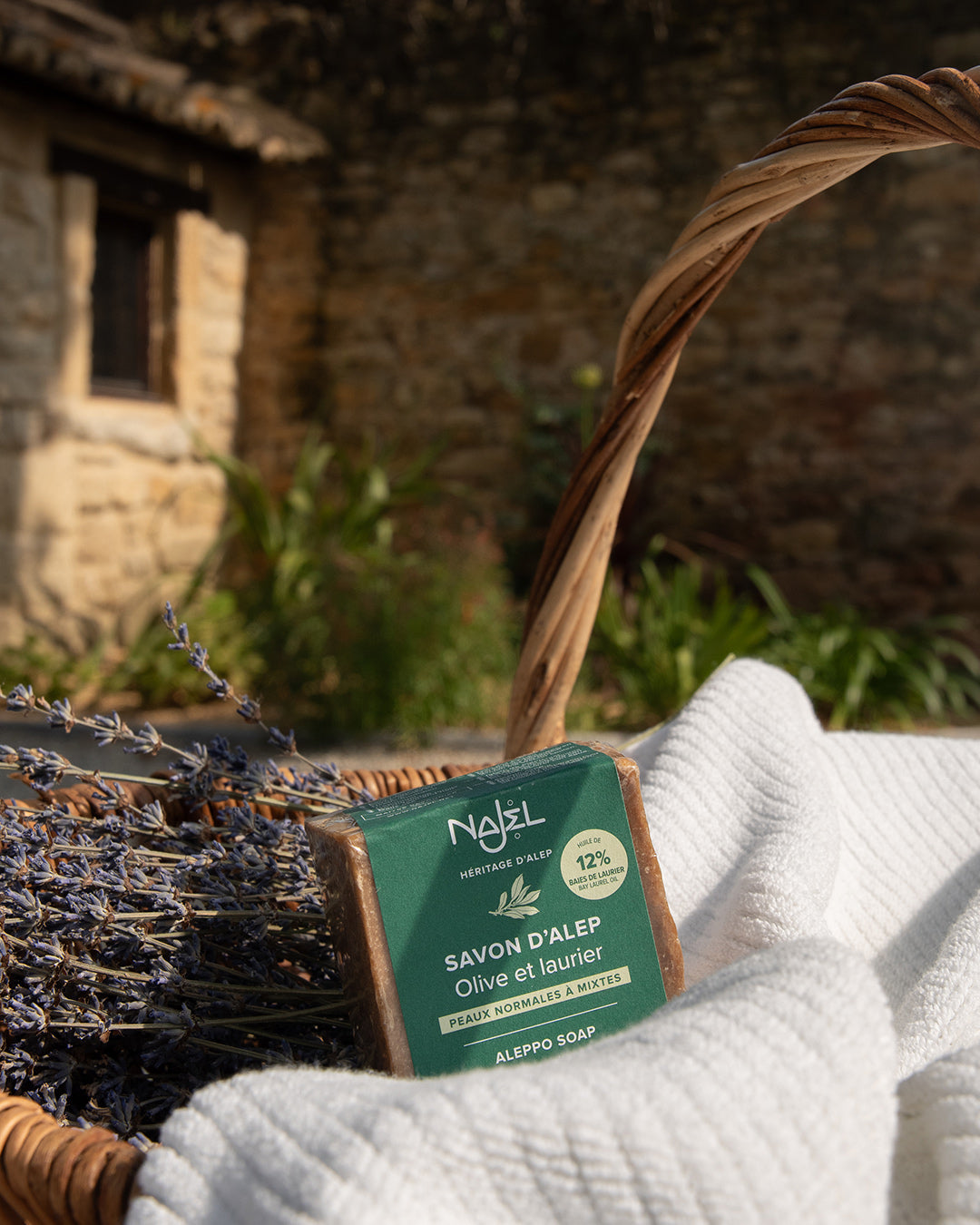

Traditional Aleppo soap, renowned for its authenticity and millennia-old history, is experiencing growing popularity. However, with so many counterfeits on the market, it becomes essential to distinguish the real from the fake. Shape, smell, composition, origin... Every detail matters. At Najel, we perpetuate the tradition with Aleppo soaps made in Aleppo, respecting ancestral savoir-faire. Here's how to recognize an authentic Aleppo soap, from a true Syrian soap factory.
Ancestral savoir-faire, passed down from generation to generation
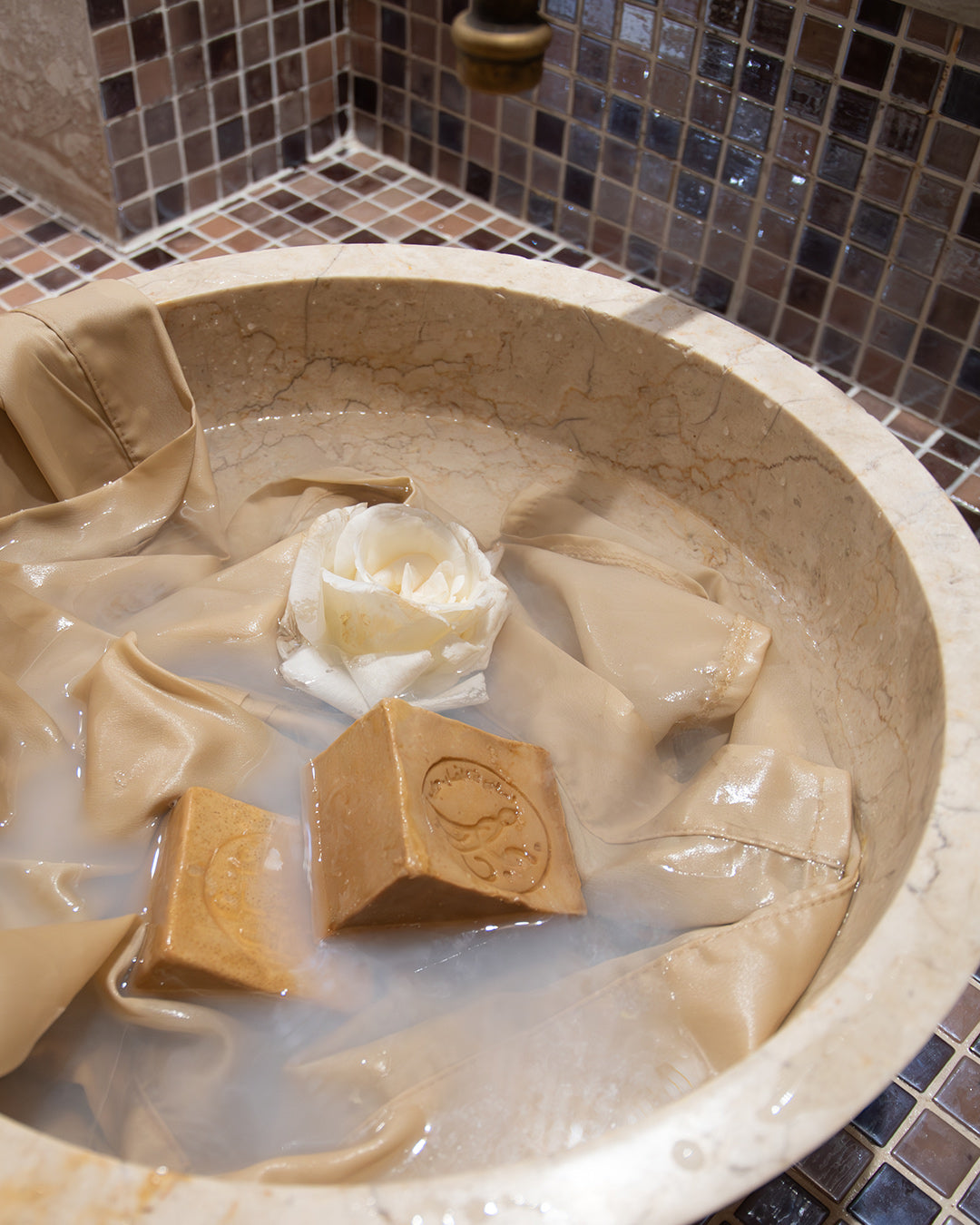
True Aleppo soap originates from Aleppo, Syria, the cradle of a soap-making tradition over 3,500 years old. It is the result of rigorous craftsmanship, perpetuated by master soap makers. At Najel, our soaps have been made in Aleppo since 1895, in our family soap factory. The process follows the traditional hot saponification method in a cauldron, followed by air-drying for several months. This attention to detail results in unique, raw, irregular bars, hand-stamped, and recognizable by their brown exterior and emerald green heart.
Natural ingredients and a mastered formulation
An authentic Aleppo soap primarily contains olive oil, laurel berry oil, water, and soda. Components from the saponification process may also be added. Our complete formula is as follows: Sodium olivate (olive oil soap), Sodium laurelates (laurel berry oil soap), Aqua, Glycerin, Sodium chloride, Sodium hydroxide. Glycerin is naturally produced during saponification, salt (sodium chloride) aids in the solidification of the bar, and soda (sodium hydroxide) is essential for transforming oils into soap.
Unmistakable visual and sensory signs
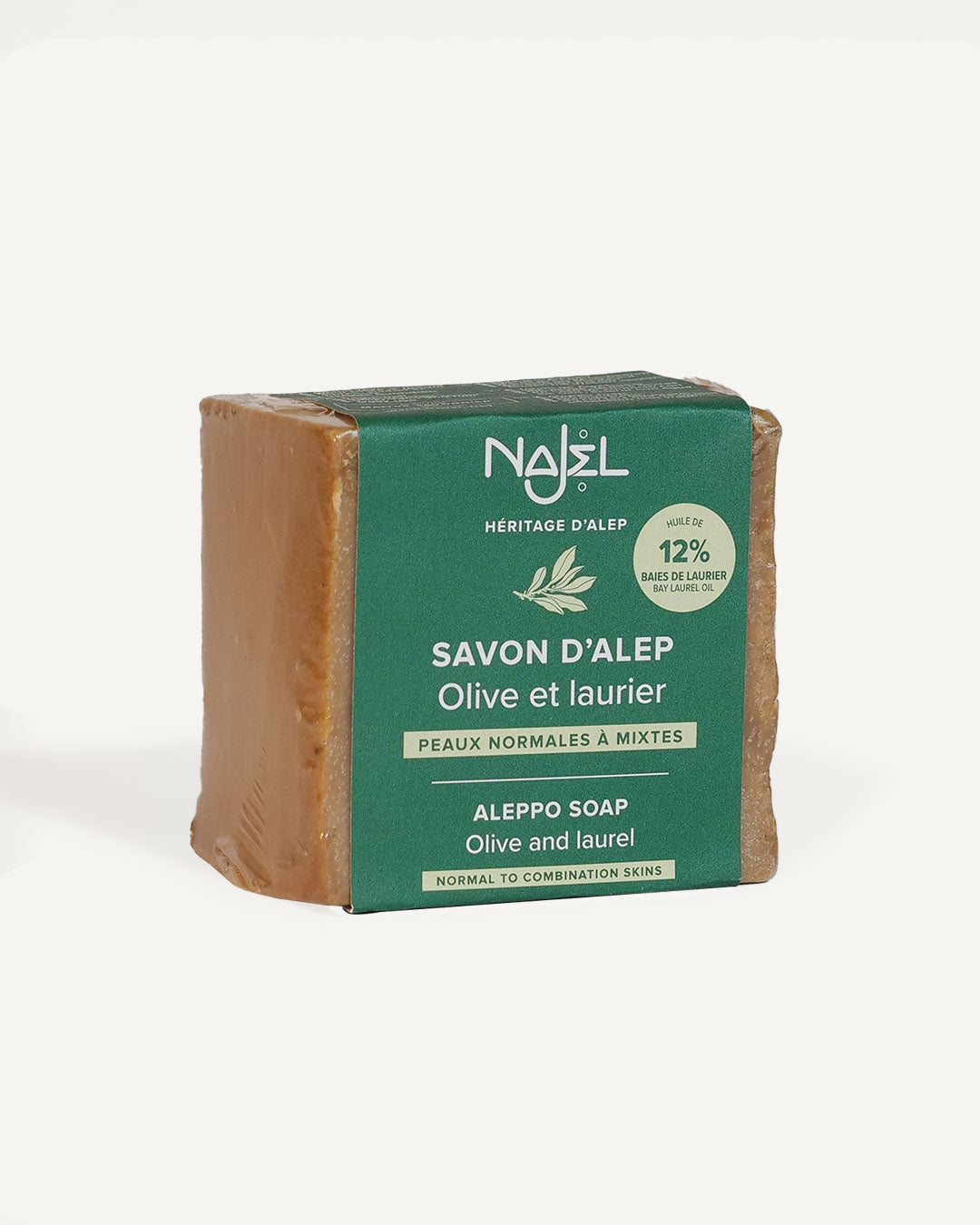
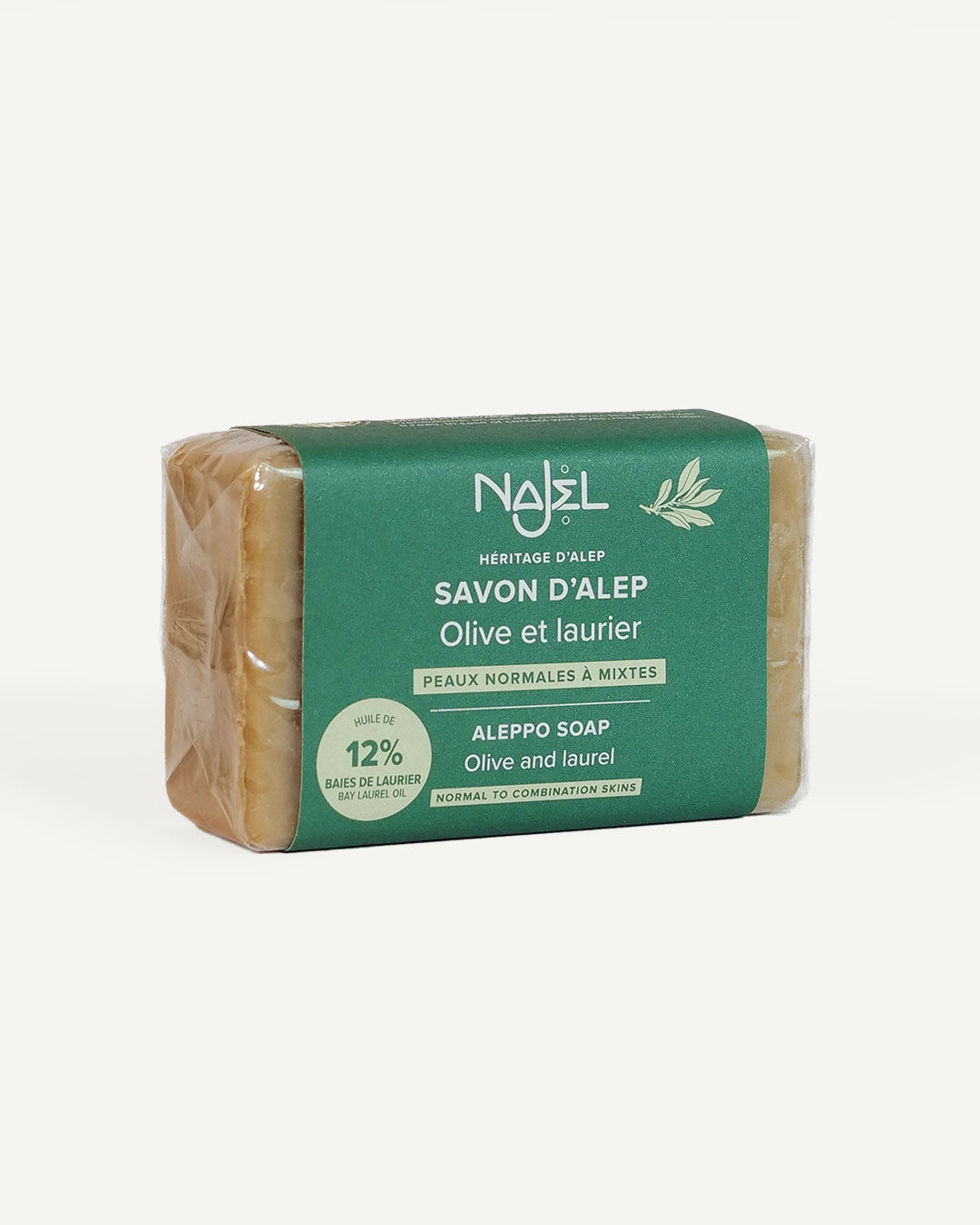
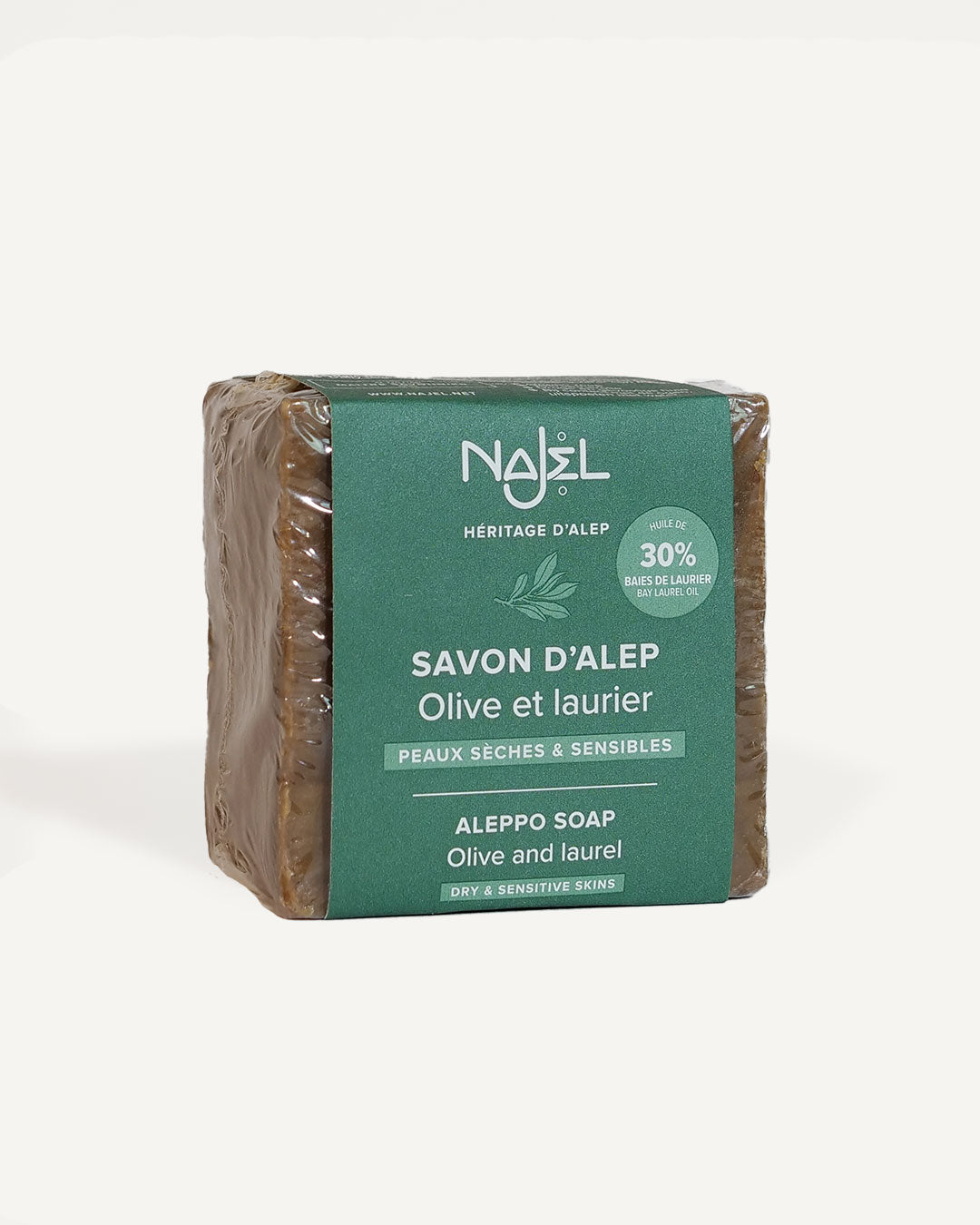
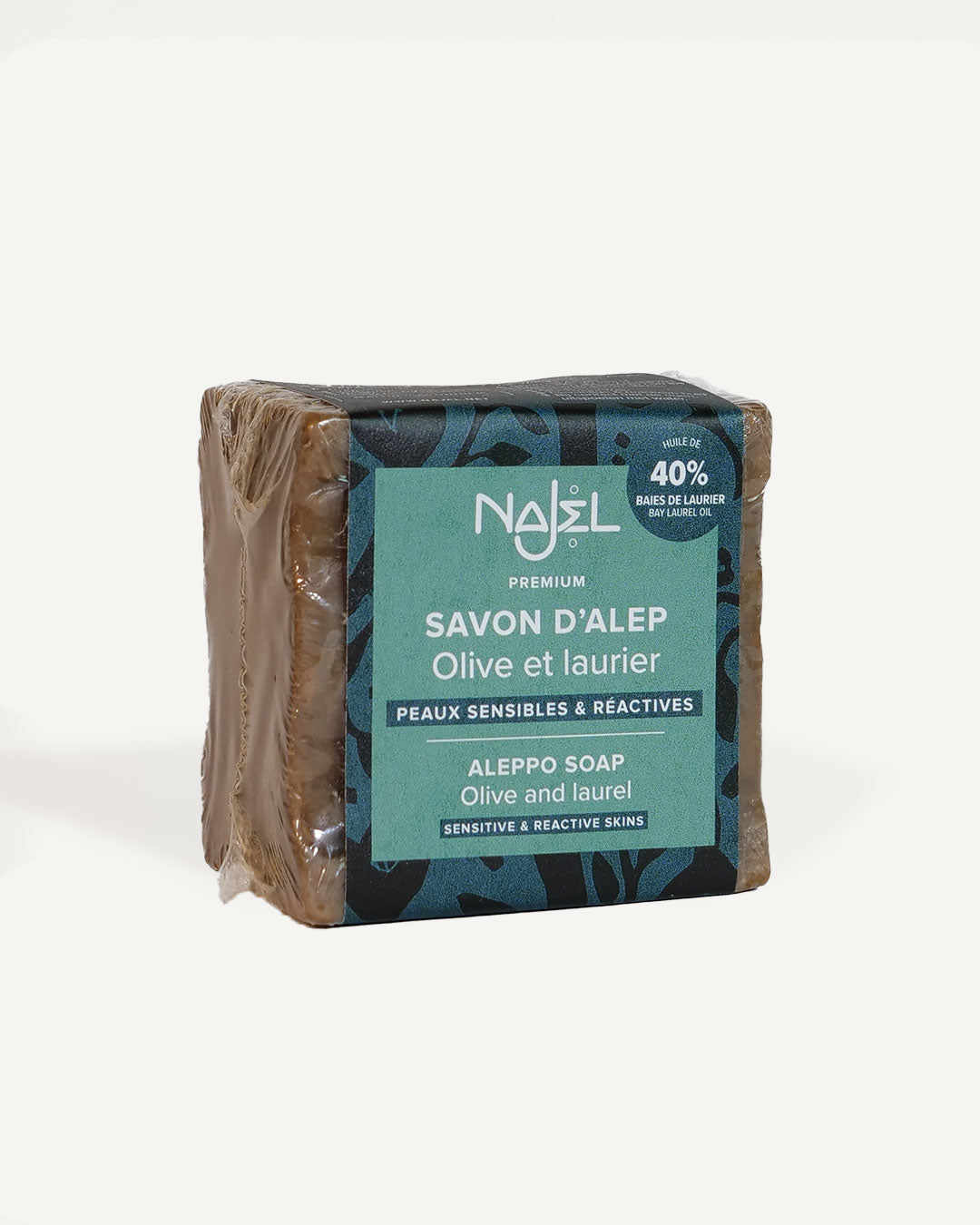
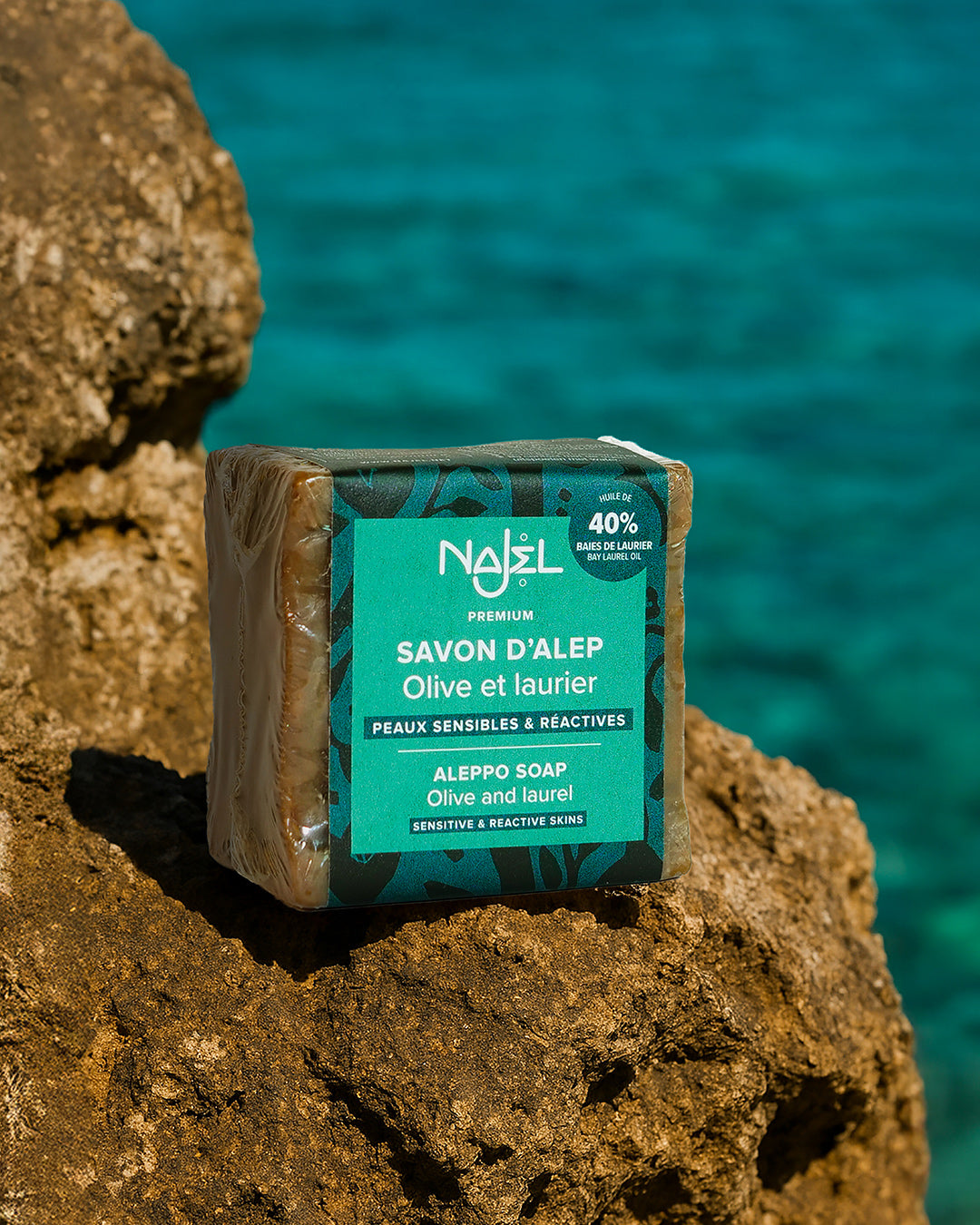
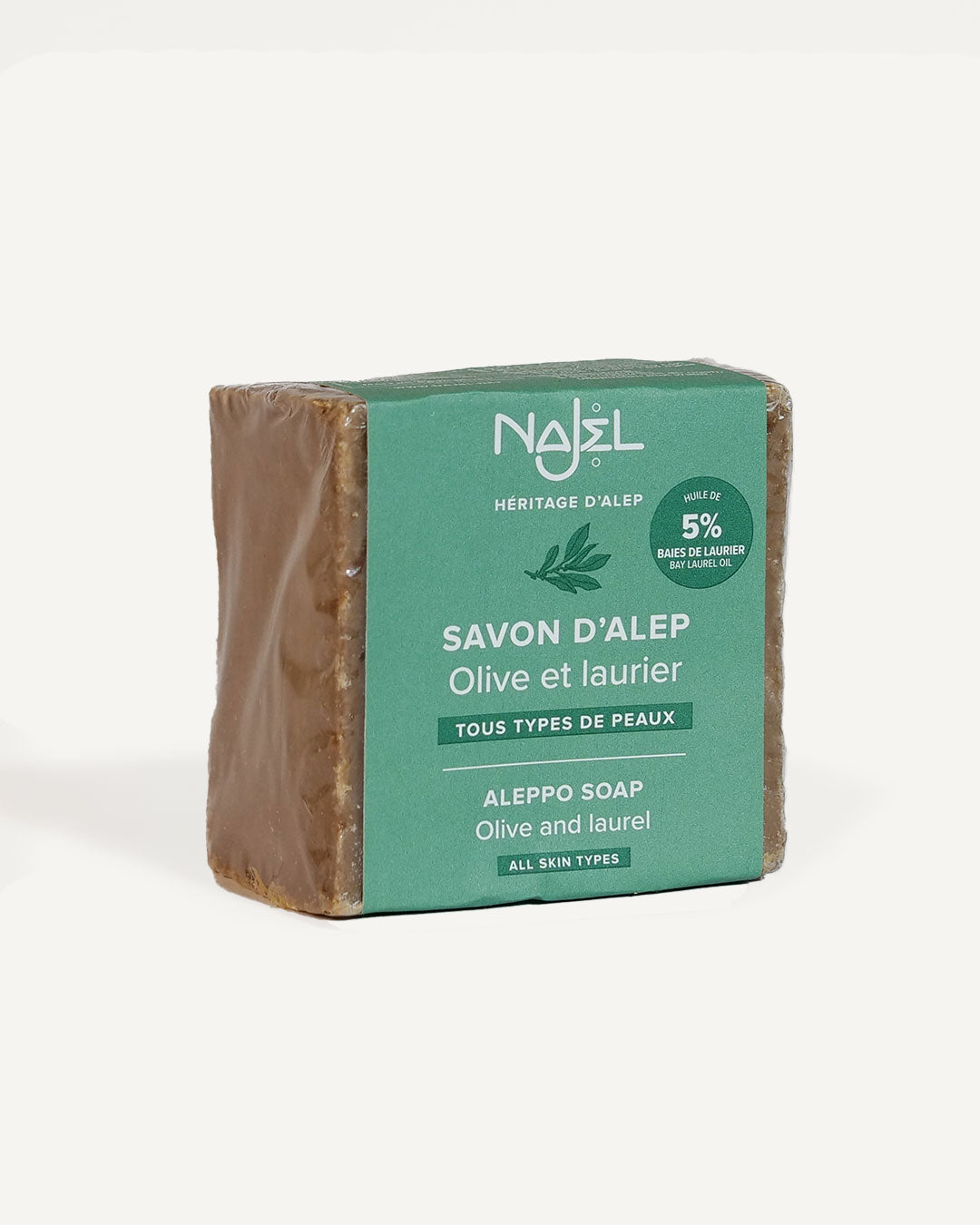
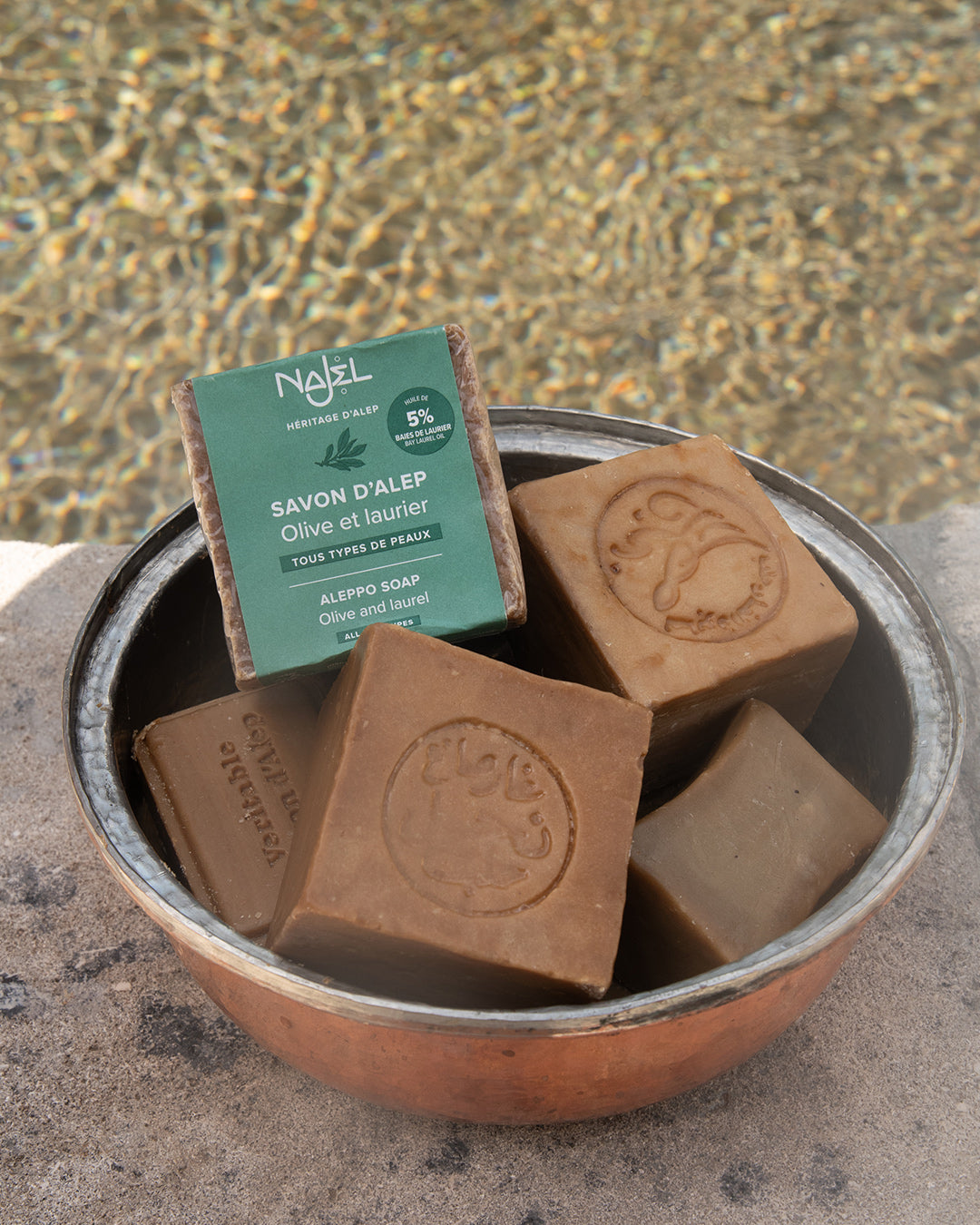
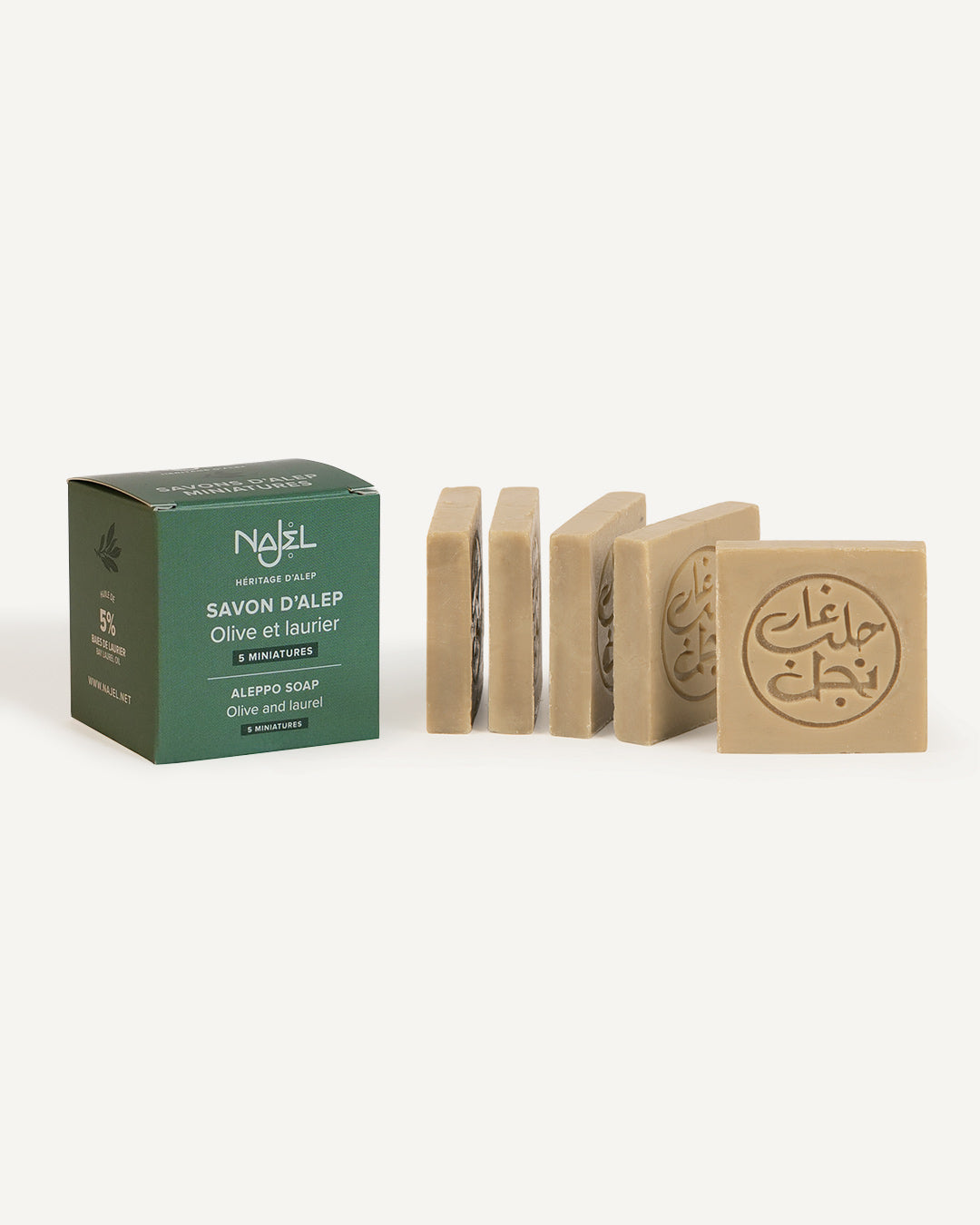
Traditional Aleppo soap is easily distinguishable. It is cuboid or parallelepiped in shape, with a raw appearance due to artisanal cutting. Its exterior color is brownish-beige and its heart is intensely green, indicating a long drying period and a high laurel oil content. Its unique smell, both vegetal and slightly acrid, blends olive and laurel. Finally, it is hand-stamped with an Arabic seal, a sign of its Syrian origin and authenticity. Our soaps with 5%, 12%, 30%, and 40% laurel meticulously meet these criteria, guaranteeing their quality.
Good practices to recognize an authentic soap
To avoid imitations, a few simple tips: read the label carefully, check that the manufacturing is indeed Syrian, scrutinize the INCI list, observe the soap's appearance, test its buoyancy (often, it floats if it is well dried), and trust its fair price, a reflection of the quality of the raw materials. Our traditional Aleppo soaps are made according to the ancestral recipe and are available in different laurel oil concentrations, adapted to everyone's needs. The higher the percentage, the more suitable the soap is for sensitive skin.
Conclusion, how to be sure to make the right choice at a glance?
Recognizing a real Aleppo soap doesn't require technical knowledge; you just need to observe:
- Irregular shape, not smooth, proof of artisanal cutting
- Strong olive and laurel scent, almost acrid
- Brownish-green color on the outside, emerald green inside
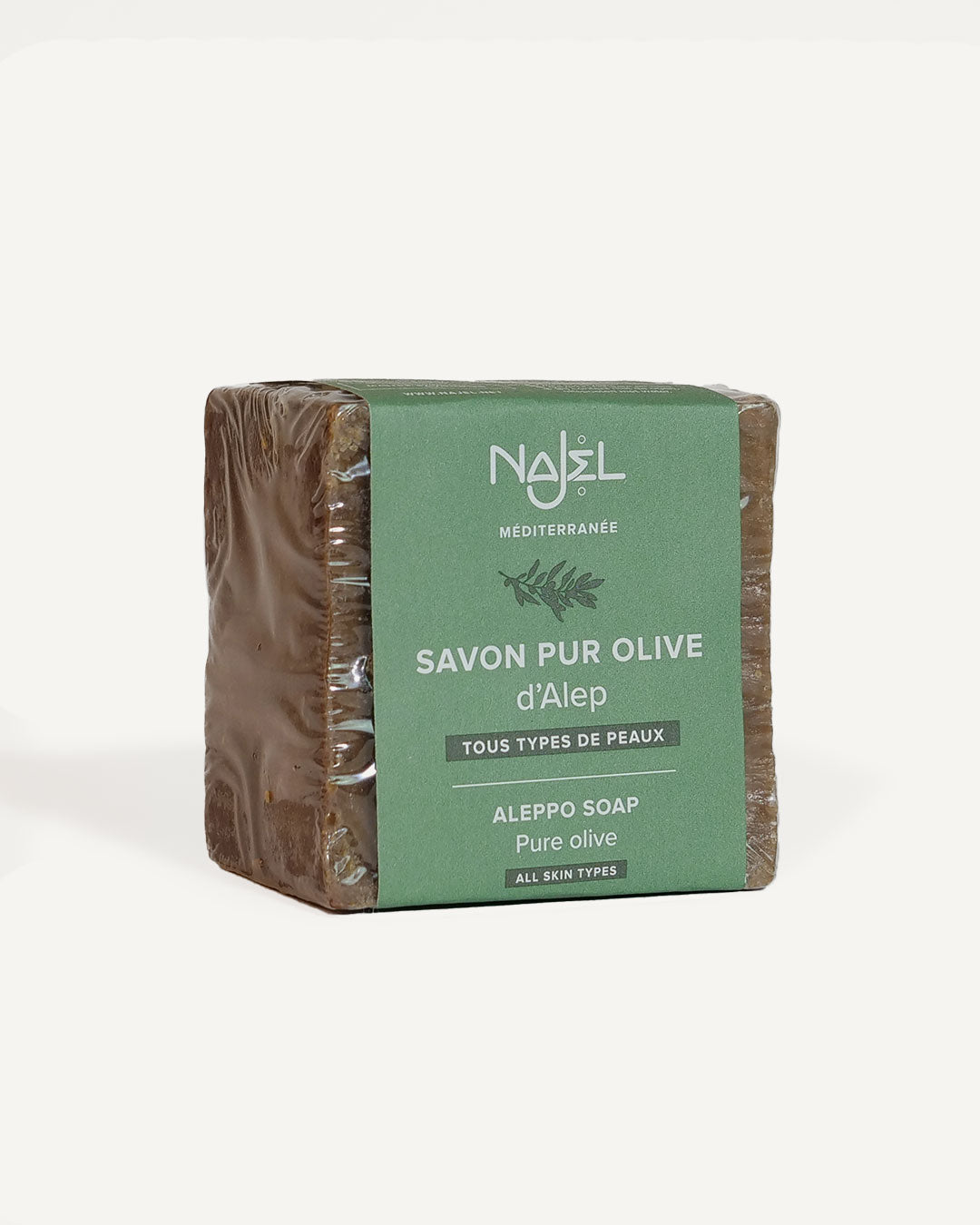
- "Made in Syria" label visible on the packaging
- Hand-applied Arabic seal
- Simple and legible ingredients: olive oil, laurel oil, soda, water
By choosing Najel, you are assured of a traditional, authentic Aleppo soap, made according to the rules of art for over a century.